Thinking about building just outside Carson City? It can be a smart way to get more space, views, or a lot that fits your plans, but edge-of-city parcels come with one big catch: the rules can change fast depending on exactly where the property sits. If you want to avoid surprises, you need to confirm jurisdiction, access, utilities, and permit steps before you buy. Let’s dive in.
Why parcel location matters first
When you are planning a home build on the edges of Carson City, the first question is not design, budget, or even builder selection. It is which jurisdiction controls the parcel. That answer affects zoning, setbacks, access review, water and sewer requirements, septic rules, and the permit process.
Inside Carson City, the Planning Division handles zoning, subdivision and land development review, easements, roadway abandonments, lot line adjustments, and building plan review. Carson City also staffs a One Stop Shop and Permit Center, which can streamline the process when your parcel is within city limits.
If the lot falls outside city limits, Carson City’s one-stop process does not apply. Nearby counties such as Douglas County and Lyon County use their own permit systems and require their own land-use and utility documentation before a building permit can move forward.
Start with zoning and setbacks
Before you get attached to a parcel, confirm its zoning and basic development standards. Carson City Planning provides setback guidance and an interactive zoning and assessor map, which makes this one of the first checks worth making.
This step helps you understand what can be built and where it can sit on the lot. It can also reveal whether lot line adjustments, easements, or other land-use issues may need attention before plans can move ahead.
If you are looking near the city edge, do not assume the address tells the whole story. A parcel that feels like Carson City may actually fall under a county process, and that can change the timeline and required documents.
Access can make or break a build
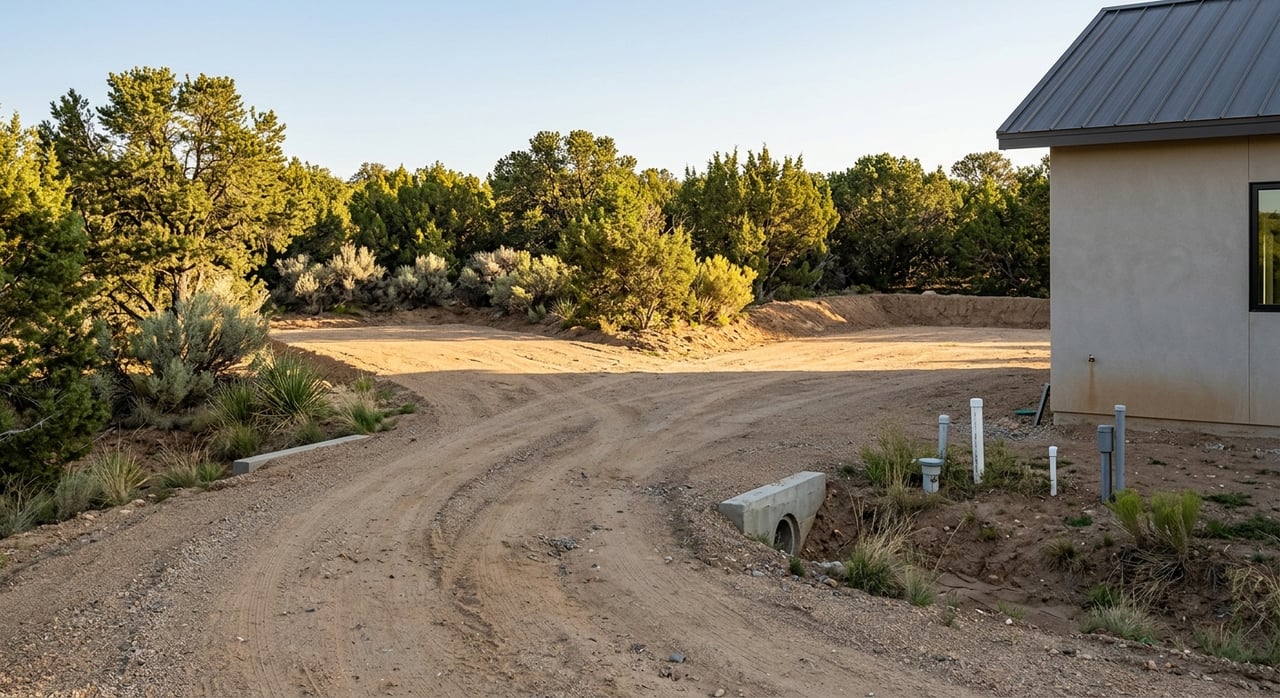
A parcel may look buildable on paper, but access is often the first real-world test. You want to know how you legally and physically get to the homesite before closing.
In Carson City, Development Engineering reviews grading, drainage, utilities, street improvements, sidewalks, paving, signage, public right-of-way, and easement records. That means access questions are tied to more than just a driveway. They can affect site work, stormwater planning, and off-site improvements.
If your access touches a state roadway, Nevada Department of Transportation approval may also be required. NDOT says no use of a state roadway is authorized until an encroachment permit has been processed and approved.
County properties may come with their own road access requirements. Douglas County notes that paved driveway approaches may be required, and Lyon County says county-road or state-highway access may require a road encroachment permit. Larger site work in Lyon County can also require a mass grading permit.
What to verify before you buy
Before making an offer, ask whether the parcel has:
- Legal frontage on a public road
- A recorded easement for access
- A driveway approach requirement
- A road encroachment issue
- Off-site access questions that could delay permitting
This is one of the most important due diligence steps for edge-of-city land. If access is unclear, everything else can get harder and more expensive.
Water and sewer shape your options
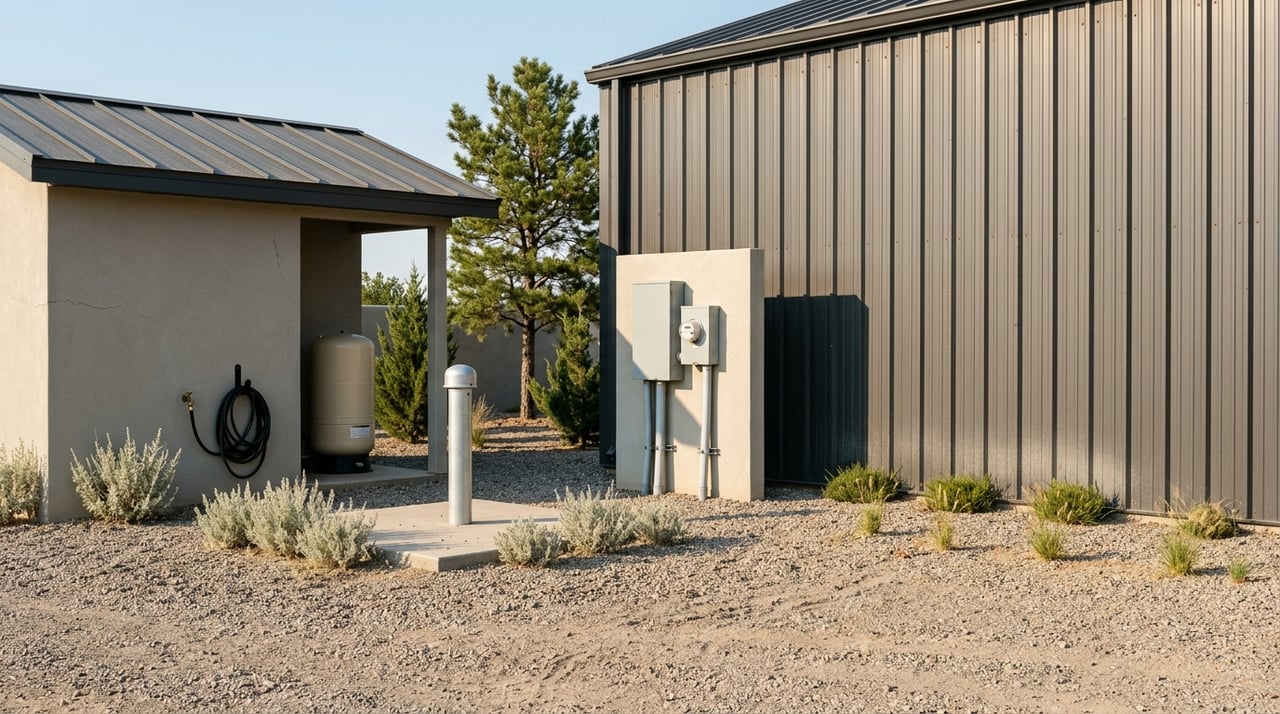
For many buyers, utilities are the biggest factor in deciding whether a lot is practical. On the edges of Carson City, you need to know early whether the parcel can connect to public water and sewer or whether it will need a well, septic system, or both.
Carson City says its municipal system has adequate water rights for anticipated city growth, and overall water and wastewater capacity is generally not an issue today. Even so, location still matters because the cost and feasibility of connecting can vary by parcel.
Within Carson City, the Sewer Division handles line extensions and connections, and Utility Billing provides water and sewer service applications for new residential customers. That makes it important to check not just whether service exists in general, but whether it is available to your specific lot.
Outside Carson City, counties may require utility proof much earlier in the process. Douglas County asks for water and sewer approvals or will-serve letters before plan check, and Lyon County requires documented water and sewer provisions before it will accept a permit application.
Septic and well planning takes time
If your parcel will not connect to public sewer, septic feasibility becomes a major checkpoint. In Carson City, residential on-site septic is regulated by Carson City Health and Human Services.
The city’s septic design process begins with a test-trench inspection and percolation testing at both 2-foot and 4-foot depths. Current application materials also state that a permit will not be issued without a complete soil profile or percolation test data, and two percolation tests are required for each system.
That means a lot is not truly ready for your home plans until the site has shown it can support the system required. If septic is part of your plan, verify whether trench work and perc testing have already been done and whether the parcel meets applicable state spacing and local lot-size rules.
Wells require their own review. Carson City says wells drilled within the city must be applied for, designed, and constructed by a well driller licensed by the State Engineer, and the driller must apply for a permit at the Building Department and submit required well documents to the Division of Water Resources.
State guidance says domestic wells are generally exempt from state permitting for one single-family dwelling, but generally not if public water can physically and legally serve the parcel. The number of homes allowed on a parcel is also a local-government decision, which is another reason jurisdiction matters so much at the start.
Watch for sewer conversion areas
Some edge areas have another layer to consider: sewer conversion planning. Carson City has a southeast sewer conversion project because individual septic disposal systems have contributed to groundwater nitrate concerns in that area.
The city reports that Phase 9A was completed in 2025 and Phase 9B is planned for 2026. Properties in the affected area may be asked to connect when sewer becomes available, and possible fee waivers may apply if the connection happens within the city-defined waiver period.
If you are buying land in southeast Carson City or nearby areas, ask whether the parcel falls inside a sewer conversion area. That answer could affect both your short-term build planning and your long-term utility costs.
Floodplain and site engineering matter early
A beautiful lot can still come with engineering challenges. Carson City Development Engineering keeps FEMA flood maps and elevation certificates on file, so floodplain review should happen during early site screening, not after you are deep into design.
This is especially important for parcels on the edge of developed areas, where drainage patterns, grading, and utility extensions may be more complex. Early screening can help you avoid lots that look appealing but need more time, money, or approvals than expected.
A practical order of operations
If you want a smoother path, follow a simple sequence before closing and before submitting plans.
1. Confirm jurisdiction
Find out whether the parcel is inside Carson City or in Douglas County or Lyon County. This tells you which rules, review process, and permit portal apply.
2. Verify zoning and setbacks
Check zoning, setbacks, easements, and any lot line or roadway issues. This helps confirm that your intended home placement is realistic.
3. Review access
Look at legal frontage, easements, driveway needs, and possible encroachment permits. If access is not clear, pause before moving forward.
4. Confirm utility feasibility
Determine whether public water and sewer are available or whether you will need a well, septic system, or both. If county rules apply, ask what documentation is required before permit acceptance.
5. Gather site documentation early
If septic is needed, start trench and perc work early. If a well is needed, confirm the process and licensed driller requirements. If public utilities are planned, verify connection or will-serve documentation.
6. Submit through the correct process
Carson City uses a One Stop Permit Center with concurrent review by Planning, Fire, Engineering, Health, and Environmental Control. The submittal packet includes the APN, owner information, contractor license details, project description, project cost, and any required soils report.
Carson City also states that only the property owner, an authorized agent, or a licensed contractor may legally sign and submit the permit application. If your parcel is outside city limits, expect a different sequence through the county.
7. Plan for inspections and final approval
Permit issuance is not the end of the process. Carson City’s Building Division manages plan review, permit issuance, inspections, and document retention, and it requires the needed approvals before final inspection approval.
Questions to ask before making an offer
When you are evaluating land on the edges of Carson City, these questions can save you time and money:
- What is the parcel’s exact jurisdiction?
- What is the zoning, and what setbacks apply?
- Does the lot have legal access from a public road?
- Will a driveway approach or road encroachment permit be needed?
- Is public water and sewer available to this parcel?
- If not, can the lot support a well, septic system, or both?
- Has septic trench inspection or perc testing already been completed?
- Is the property in a floodplain review area?
- Is it inside a sewer conversion area?
- If county rules apply, what utility documentation is required before permit acceptance?
Why local guidance matters
Edge-of-city parcels can offer flexibility and opportunity, but they reward careful due diligence. The most common problems are not always obvious from a listing photo or a quick drive-by. They usually show up in jurisdiction, access, utility planning, and permit sequencing.
That is why practical local guidance matters when you are comparing lots, reviewing disclosures, and deciding what questions to ask before closing. A little work up front can help you avoid buying a parcel that costs more to develop than expected.
If you are weighing land options around Carson City and want a practical read on access, utilities, and buildability, reach out to Kimberlie Buffington for straightforward Northern Nevada guidance.
FAQs
What should I check first for land near Carson City?
- Start by confirming the parcel’s exact jurisdiction, because Carson City, Douglas County, and Lyon County can each have different zoning, permit, access, and utility rules.
How does Carson City handle home build permits?
- Carson City uses a One Stop Permit Center, and required approvals from Planning, Fire, Engineering, Health, and Environmental Control must be in place before a building permit is issued and before final inspection approval.
What access issues matter for a home build near Carson City?
- You should verify legal frontage, easements, driveway requirements, and whether a road or highway encroachment permit is needed, especially if access involves a state roadway.
What septic steps apply to a Carson City home build?
- For residential on-site septic in Carson City, the process starts with a test-trench inspection and percolation testing at both 2-foot and 4-foot depths, and permit materials require soil profile or perc data.
Can a parcel near Carson City use a domestic well?
- A domestic well may be allowed for one single-family dwelling under state guidance, but generally not if public water can physically and legally serve the parcel, and local rules still affect what is allowed.
Why should buyers ask about sewer conversion areas in Carson City?
- Some properties may be asked to connect when sewer becomes available, and that can affect future costs, timing, and whether a fee waiver period may apply.